
20th May 2026
Why Choose Genuine OEM Turbos?
Why Genuine OEM Turbos?
When a turbocharger fails, the replacement decision is about more than price. For repair shops, fleet managers, diesel technicians, and serious vehicle owners, the real question is simple: which turbo gives you the highest chance of a clean installation, proper performance, and no comeback?
That is why genuine OEM turbos continue to be the preferred choice for professional repairs. A turbocharger is not just a bolt-on part. It is a precision-engineered component tied directly to the engine’s boost control, exhaust flow, air management, emissions strategy, fuel efficiency, and overall drivability.
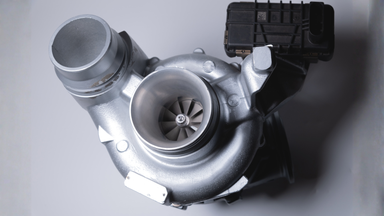
At TURBOS.COM, we focus on high-quality turbocharger replacements for buyers who cannot afford guesswork. Whether you choose a new genuine OEM turbo or a professionally remanufactured OEM turbo, the goal is the same: restore factory-level performance, reduce installation risk, and keep the vehicle working.
What Does OEM Turbo Mean?
OEM stands for Original Equipment Manufacturer. In the turbocharger world, an OEM turbo is built to match the specifications required by the vehicle or engine manufacturer.
That matters because modern turbochargers are highly application-specific. The correct turbo must match the vehicle’s engine, exhaust layout, oil and coolant connections, compressor and turbine sizing, actuator configuration, boost-control strategy, and calibration requirements. In many applications, especially diesel trucks, commercial vehicles, off-highway equipment, and late-model emissions-controlled engines, close enough is not good enough.
A genuine OEM turbo is designed to work with the engine the way the manufacturer intended. That means the replacement is not merely shaped to fit the engine bay. It is engineered to deliver the correct boost response, airflow, durability, and control behavior.
For a repair shop, that difference can be the difference between a smooth job and hours of additional diagnostic time.
Why Genuine OEM Turbos Reduce Shop Comebacks
Every professional technician knows that a comeback can erase the profit from a job. The customer may think the replacement turbo failed, even when the real issue is a misdiagnosis, poor-quality part, incorrect calibration, oil contamination, a restricted feed line, or an installation problem.
Choosing a genuine OEM turbo helps reduce one major variable: part uncertainty.
With an OEM-quality replacement, the shop is not gambling on unknown internal components, questionable balancing, inconsistent actuator behavior, or a turbo that technically bolts up but does not perform correctly.
For shops and fleets, that matters because the cost of a bad turbo is rarely limited to the turbo itself. The real costs can include lost bay time, repeat diagnostics, customer dissatisfaction, towing or roadside downtime, warranty disputes, damage to the engine or emissions system, and loss of trust with a fleet account or commercial customer.
The cheapest turbo on the invoice is not always the cheapest repair.
New OEM vs. Remanufactured OEM Turbos
At TURBOS.COM, we support both new OEM turbos and high-quality remanufactured OEM turbos. Both can be excellent options when sourced correctly.
New Genuine OEM Turbos
A new genuine OEM turbo is the most direct replacement option. It is the right choice when the buyer wants a brand-new unit built to the original design and specifications.
New OEM turbos are often ideal for late-model vehicles, high-value fleet assets, customer-pay repairs where maximum confidence matters, applications where downtime is extremely expensive, and situations where the customer specifically requests new OEM parts.
Remanufactured OEM Turbos
A remanufactured OEM turbo should not be confused with a cheap used, patched, or low-grade rebuilt turbo. A proper remanufactured turbo goes through a controlled restoration process that includes disassembly, cleaning, inspection, component replacement, balancing, calibration, and quality checks.
At TURBOS.COM, our remanufactured OEM turbos go through a professional U.S.-based remanufacturing process that includes VSR balancing, actuator calibration, new bearings and seals, replacement of worn hard parts, thorough cleaning and inspection, and up to a 3-year warranty.
That process is designed for buyers who want OEM-level fitment and reliability with strong value.
Why the Remanufacturing Process Matters
Not all remanufactured turbos are equal.
A professional remanufacturing process is not simply cleaning up a used turbo and replacing one visible damaged part. The quality of the finished unit depends on the inspection standards, replacement components, balancing procedure, actuator calibration, cleanliness, and final quality checks.
A low-grade rebuilt or will-fit turbo may look similar from the outside, but the risk is inside the unit. Shaft balance, bearing quality, vane control, actuator calibration, material quality, oil clearance, and high-speed durability all matter. In turbochargers, small differences can create big problems.
A properly remanufactured OEM turbo gives buyers a better value path without giving up the core advantages of OEM design.
The Hidden Cost of Cheap Turbochargers
The appeal of a cheap turbo is obvious. It lowers the immediate invoice.
But for professional buyers, the initial purchase price is only one part of the cost. A turbocharger replacement touches too many systems to be treated like a commodity part. If the replacement does not perform correctly, the shop or fleet may face far greater costs than the original savings.
Common risks with low-quality or questionable replacement turbos include incorrect fitment, poor boost response, actuator or calibration issues, excessive noise or vibration, premature bearing wear, oil leakage complaints, check engine lights, reduced power, excessive smoke, repeat labor, and customer dissatisfaction.
For fleets, the risk is even larger. A truck, van, bus, generator, tractor, or piece of equipment that is down is not producing revenue. Downtime creates labor disruption, delivery delays, rental costs, scheduling problems, and operational headaches.
That is why many professional buyers evaluate turbochargers based on total repair confidence, not just purchase price.
A Turbo Failure Is Often a Symptom, Not the Root Cause
One of the most important things to understand is that turbochargers rarely fail in isolation. A failed turbo may be the result of a restricted oil feed line, contaminated oil, improper priming before startup, blocked or restricted oil drain, foreign object damage in the intake or exhaust path, excessive crankcase pressure, exhaust restriction, air filter or intake system failure, prior turbo failure debris, engine maintenance issues, or incorrect installation procedure.
Replacing the turbo without correcting the root cause can destroy the replacement unit quickly.
That is why TURBOS.COM recommends treating turbo replacement as a complete repair process, not just a parts swap.
What Shops Should Check Before Installing a Replacement Turbo
A high-quality turbo deserves a high-quality installation. Before installing any replacement turbocharger, technicians should verify that the supporting systems are ready for the new unit.
A professional pre-installation checklist should include confirming the correct part number and application, inspecting the failed turbo for clues about root cause, checking oil feed and drain lines, replacing restricted or contaminated oil lines when needed, changing the engine oil and filter, inspecting the air intake system, checking the charge-air cooler and piping for oil or debris, inspecting exhaust restrictions and DPF-related issues where applicable, verifying crankcase ventilation, priming the turbo before initial startup, following manufacturer torque and installation procedures, and allowing proper oil pressure before loading the engine.
This kind of discipline helps protect the new turbo and reduce repeat failures.
For repair shops, the message to the customer is simple: the turbocharger is being replaced, but the cause of failure also needs to be addressed.
Why OEM Fitment Matters for Modern Engines
Older turbo applications were often more mechanical. Many modern systems are not.
Today’s turbochargers may use electronic actuators, variable geometry, integrated sensors, water cooling, advanced emissions strategies, and tight engine-management calibration. A replacement turbo that does not match the original design can create drivability issues even if it physically bolts into place.
OEM fitment helps protect against problems such as incorrect boost control, slow spool or poor transient response, overboost or underboost faults, actuator communication issues, poor fuel economy, excessive smoke, emissions-related fault codes, and customer complaints under load.
For a fleet manager, that means fewer unexpected issues after the vehicle leaves the shop. For a repair shop, it means fewer conversations where the customer says the vehicle still does not feel right.
Genuine OEM Turbos Protect Your Reputation
A repair shop’s reputation depends on doing the job right the first time. Fleet managers are measured by uptime, cost control, and operational reliability. Vehicle owners want confidence that the repair will last.
That is why genuine OEM and high-quality OEM remanufactured turbos are a professional choice.
They help protect the engine, the technician’s time, the customer relationship, the fleet’s uptime, the shop’s warranty exposure, and the buyer’s long-term cost of ownership.
A turbocharger is too important to source blindly.
Why Buy from TURBOS.COM?
TURBOS.COM is built for buyers who want quality, accuracy, and confidence when replacing a turbocharger.
We understand that our customers are often not just buying a part. They are trying to finish a repair, keep a truck on the road, protect a fleet schedule, satisfy a customer, or avoid an expensive comeback.
That is why we focus on high-quality turbocharger solutions, including both new genuine OEM turbos and professionally remanufactured OEM turbos.
Our remanufactured OEM turbos are built through a U.S.-based process that includes VSR balancing, actuator calibration, new bearings and seals, replacement of worn hard parts, detailed cleaning and inspection, and up to a 3-year warranty.
When uptime matters, the right turbo is not just a part. It is insurance against wasted labor, repeat failures, and avoidable downtime.
Final Takeaway: Buy the Turbo That Reduces Risk
A cheap turbo may lower the invoice today, but a genuine OEM or professional OEM remanufactured turbo can reduce the bigger risks: poor fitment, drivability problems, premature failure, installation headaches, warranty disputes, and costly downtime.
For repair shops, that means fewer comebacks. For fleet managers, that means more uptime. For vehicle owners, that means confidence that the replacement turbo was chosen for quality, not just price.
When the job matters, choose a turbocharger built to match the engine, the application, and the demands of real-world use.
Shop New Genuine OEM & Professionally Remanufactured OEM turbochargers at TURBOS.COM.